Emotional Regulation Isn’t Control — It’s Compassion
Emotional regulation is often misunderstood. It’s framed as staying calm, holding it together, not reacting, not crying, not snapping, not falling apart. For many women, especially those who spent years managing other people’s emotions, regulation can feel like another demand, another quiet expectation to “be better” or override what they are actually feeling.
But emotional regulation is not control. It is not suppression. It is definitely not silencing yourself. Regulation is a relationship, the way you learn to meet your emotions with safety instead of force. It’s about staying with yourself rather than pushing feelings away or judging them as inconvenient.
So many of us were taught that strong emotions are problems to solve. Anger was something to get rid of. Sadness was something to move through quickly. Anxiety was something to outthink. Overwhelm was something to power through. Growing up in that environment teaches the nervous system that emotions are dangerous, not because emotions themselves are harmful, but because there was no safe space to feel them fully.
Changing the Relationship With Your Emotions
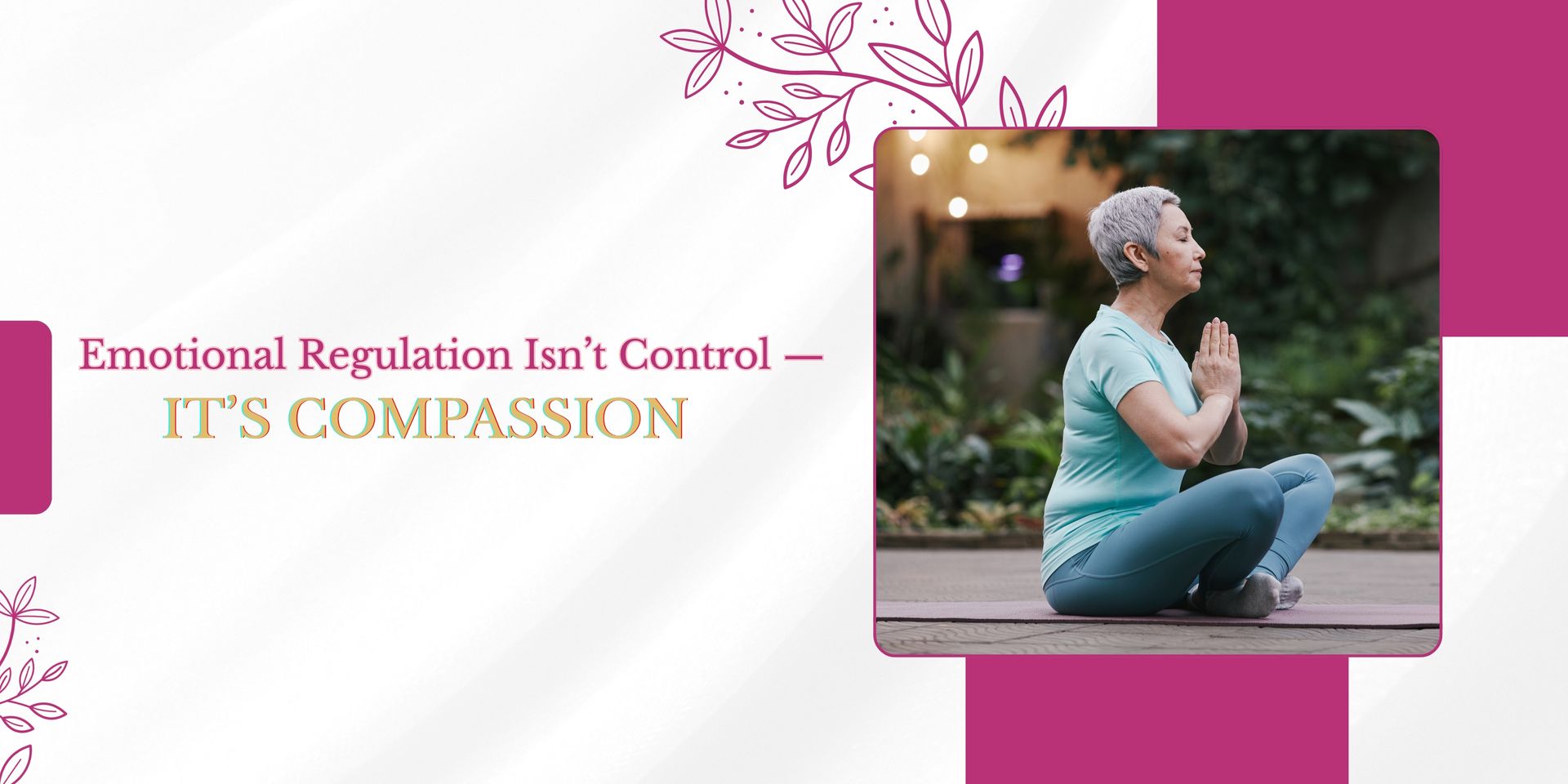
Emotional regulation isn’t about stopping what you feel. It’s about asking a different question: “Can I stay with this without abandoning myself?” True regulation doesn’t require calm. It requires presence. It doesn’t demand logic. It asks for kindness. It doesn’t push you to cope better. It invites you to listen to yourself and your body.
When your nervous system feels unsafe, it moves into protection: fight, flight, freeze, shutdown. These aren’t choices; they’re biological responses. No amount of willpower can override a system that believes it’s under threat. That’s why regulation can’t be forced. You cannot shame your nervous system into trust. You cannot demand calm from a body that feels overwhelmed.
Compassion as the Path to Regulation
What actually creates regulation is compassion. Compassion looks like slowing down when you want to push through. Noticing the tension before trying to fix it. Allowing an emotion to exist without rushing it away.
Emotional regulation isn’t about becoming unshakeable. It’s about becoming responsive. About staying with yourself through the waves instead of bracing against them. Nothing is wrong with you if regulation feels difficult. It simply means your nervous system learned what it needed to survive.
Now, it gets to learn something new, gently, slowly, with compassion. That is where true regulation begins.