Why Confidence Is a Skill, Not a Personality Trait
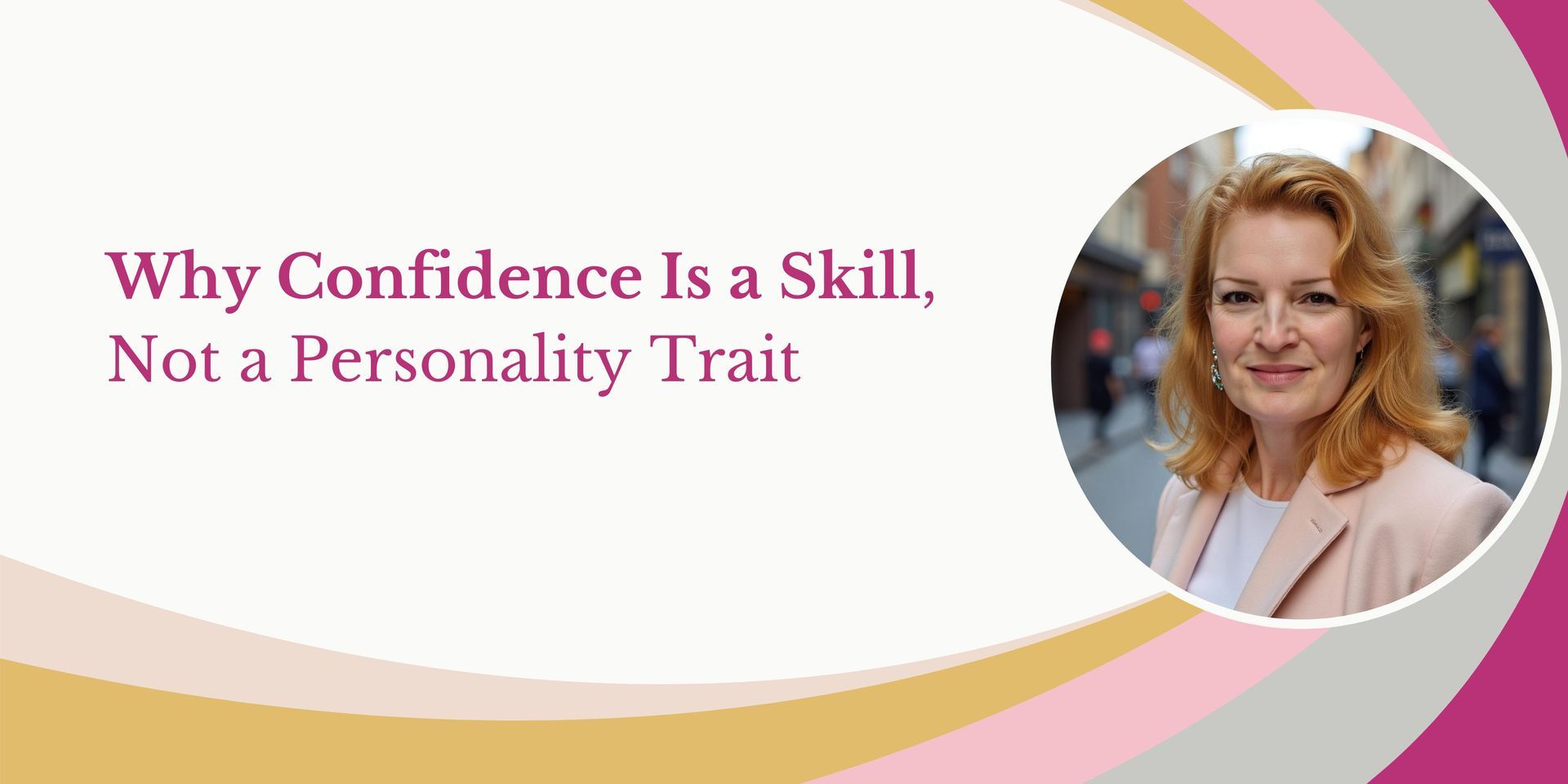
Confidence is often seen as something we're either born with or without. We admire people who seem comfortable speaking in front of a room, making difficult decisions or putting themselves forward for new opportunities, and we assume it comes naturally to them. This belief can leave many of us feeling as though confidence is simply part of someone else's personality, rather than something we can develop ourselves.
The good news is that confidence isn't fixed. It's a skill that can be strengthened over time, and understanding that can completely change the way you approach both your personal and professional life.
Confidence Is Built Through Action, Not Certainty
One of the biggest misconceptions about confidence is that you need to feel confident before you take action. In reality, the opposite is often true. Whether it's speaking up in a meeting, applying for a promotion or starting a new business, confidence is usually built by taking the first step despite feeling uncertain. Every time you do something that stretches you beyond your comfort zone, your brain gathers new evidence that you're capable of handling more than you previously believed.
This doesn't mean you suddenly stop feeling nervous or doubtful. It means you begin to trust yourself to cope with those feelings rather than allowing them to dictate your choices. Over time, those small moments of courage build upon one another, creating a stronger sense of self-belief. Confidence grows through experience, not by waiting for the perfect moment when fear disappears.
The Stories You Tell Yourself Matter
Our confidence is shaped by far more than our current circumstances. Many of the beliefs that influence how we think, behave and make decisions were formed years ago through our experiences, relationships and environments. If you've spent years believing you're not good enough, that you'll fail or that other people are judging you, those beliefs can quietly influence your behaviour without you even realising it.
The challenge is that these beliefs often operate beneath our conscious awareness. They can hold us back from taking opportunities, sharing our ideas or recognising our own strengths, even when there is plenty of evidence to suggest we're capable. The beliefs feel true because we've carried them for so long, but they are rarely the full picture. Becoming aware of these unconscious patterns is often the first step towards building genuine, lasting confidence.
Confidence Doesn't Mean Fear Disappears
It's easy to assume that confident people never experience self-doubt, but that simply isn't true. Everyone encounters moments of uncertainty, particularly when they're doing something meaningful or stepping into unfamiliar territory. The difference is that confident people don't expect to feel comfortable all the time. Instead, they've learned that feeling nervous doesn't necessarily mean they're making the wrong decision.
Confidence isn't about becoming fearless. It's about trusting yourself enough to move forward even when the outcome isn't guaranteed. That trust develops through repeated experiences of facing challenges, learning from mistakes and recognising that setbacks don't define your ability. In many ways, confidence is less about how you feel and more about how you choose to respond.
Self-Awareness Is Where Confidence Begins
If confidence is a skill, then self-awareness is the foundation it is built upon. Before we can change our behaviour, we need to understand what is driving it. Taking the time to explore your beliefs, thought patterns and emotional responses allows you to recognise the habits that may no longer be serving you. When you understand why you react in certain ways, you create the opportunity to respond differently.
This is why developing confidence isn't about pretending to be someone you're not. It's about becoming more connected to who you already are, recognising the beliefs that have been holding you back and consciously choosing new ways of thinking and behaving. As your awareness grows, so does your ability to trust yourself, make decisions with greater clarity and show up more authentically.
Confidence Is Something You Can Learn
Perhaps the most empowering thing to remember is that confidence isn't reserved for a select few. It isn't determined by your personality, your background or how confident you appeared yesterday. Like any skill, it develops through practice, reflection and a willingness to keep showing up, even when things feel uncomfortable.
Rather than asking yourself whether you're a confident person, consider asking what you could do today that would strengthen your confidence a little more. Small actions, repeated consistently, create lasting change. When you begin to challenge old beliefs, trust your own judgement and give yourself permission to grow, confidence becomes less about who you are and more about what you're continually building.
Ready to Explore What's Shaping Your Confidence?
If this has prompted you to think differently about your own confidence, it may be worth taking a closer look at the beliefs and patterns that are influencing how you show up every day. Sometimes, the biggest breakthroughs don't come from trying harder. They come from understanding yourself more deeply.
Whether through coaching or the OpenMind assessment, gaining greater self-awareness can help you uncover what's holding you back and begin building confidence from the inside out. Because lasting confidence isn't about becoming someone else. It's about becoming more fully yourself.