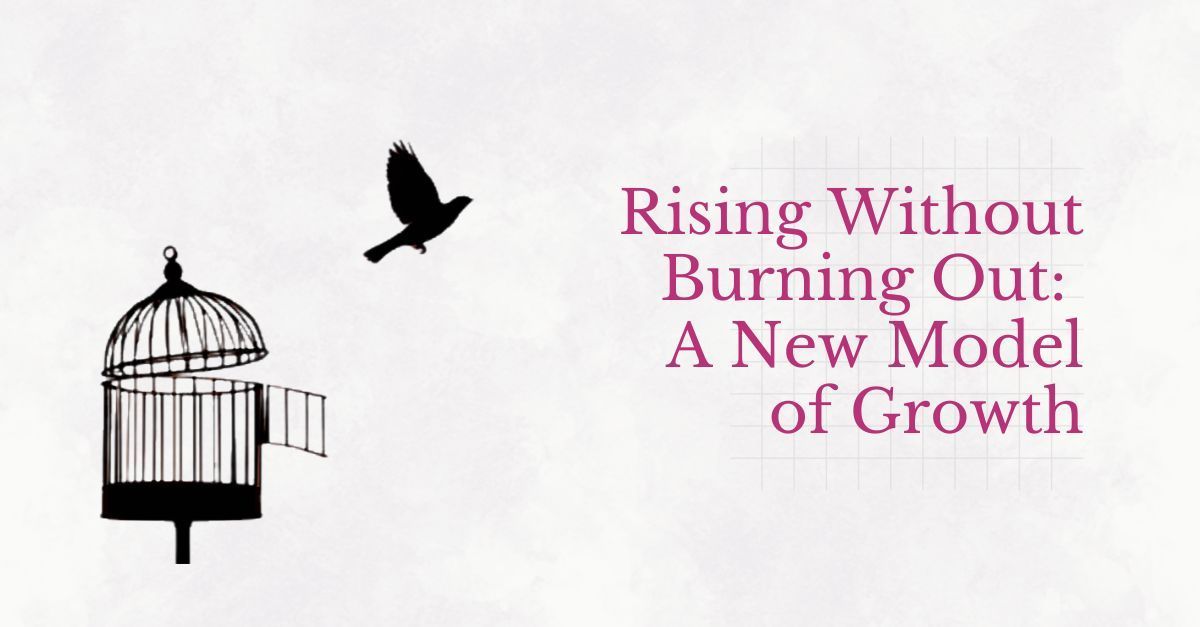
Rising Without Burning Out: A New Model of Growth
I remember the first time I truly burned out. I was juggling multiple projects, trying to keep up with everyone else’s pace, and my own expectations. My body was constantly tense, my mind racing with the next task I “had” to complete. And yet, when I looked at my diary, I thought: I’m not doing that much… why am I so tired?
It took me a long time to realise: the problem wasn’t discipline. It was that I didn’t know how to grow without ignoring my nervous system.
For so long, our culture teaches that growth requires pushing harder, more hours, more effort, more sacrifice. While this can produce results in the short term, it often comes at a cost: emotional exhaustion, physical depletion, and the constant sense that you’re “not enough.”
Burnout is often framed as personal failure, a sign you didn’t work hard enough. But in reality, it’s a systems issue. It’s your nervous system saying: I’m done with this pace. I need safety to function.
Learning to Rise Without Burning Out
The first step is recognising that growth doesn’t need to be loud, dramatic, or forceful. Growth doesn’t mean doing more, it means doing differently, in alignment with your body and your nervous system.
When I began this work, I experimented. I tried slowing down, not as a break, but as a deliberate practice of tuning into my energy. I started asking questions like:
- What pace feels sustainable?
- Which parts of this effort are actually necessary, and which am I doing to prove something to myself or others?
- What support do I need to prevent overwhelm?
Those questions changed everything. Growth became less about pushing and more about partnering with myself. Productivity didn’t drop, it became smarter, more intentional, and more fulfilling.
This approach is especially crucial for neurodivergent or highly sensitive women. Our nervous systems don’t thrive under traditional pressure-based growth models. We are wired to process deeply, feel intensely, and notice subtleties others might overlook. Without safety, pushing through leads to exhaustion, anxiety, and self-doubt.
How The Empress Collective Supports Sustainable Growth
Inside The Empress Collective, we focus on:
- Slowing down to go deeper
- Prioritising nervous system regulation before expansion
- Exploring growth strategies that honour the body and mind
- Aligning ambition with self-care and self-trust
One of the most powerful parts of this work is seeing women realise that they can be ambitious and sensitive at the same time. They don’t have to abandon one to embrace the other. Slowing down is not failure, it’s strategy. It’s intelligence. It’s partnership with yourself.
I often reflect on my earlier years and wonder how much pain could have been avoided if I’d known this sooner. I didn’t need more discipline, hustle, or sacrifice. I needed tools to align my ambition with my nervous system, permission to pause, and a safe space to rise.
That’s what we provide inside The Empress Collective, a space where ambition is honoured, but safety comes first. A space where rising doesn’t mean losing yourself, where slowing down isn’t weakness, and where sustainable growth truly lasts.
If you’ve been trying to push harder, believing that exhaustion is part of progress, I invite you to consider a different approach. Growth doesn’t have to cost your wellbeing. With pause, regulation, and alignment, you can rise in a way that is deeply rewarding, and fully sustainable.